

📢 Flash News: In view of the University examinations, the dates of the International Conference have been rescheduled and advanced to 25-26 March 2026.
International Conference on Advancements in 5G and Beyond Wireless Communication and Navigation Systems: Challenges and Opportunities – 2026
Conference Dates: 25-26 March 2026
Venue: Saranathan College of Engineering, Tiruchirappalli – 620012, India
About
ICAWCNS 2026
The aim of the conference is to bring together academicians, researchers, and industrial professionals to discuss and exchange their knowledge, innovative ideas, latest issues, advanced technologies, and advancements in the field of advanced wireless communication technologies. This conference will be an international forum for researchers, students, developers, and practitioners to exchange novel approaches, recent developments, and technological improvements. The conference invites and encourages submissions in terms of concepts, surveys, state-of-the-art original and unpublished research, applications and industrial case-studies and in-progress research that can be categorised among regular and poster papers. The conference will have many plenary lectures and invited talks by International speakers covering the latest topics in wireless communication and navigation.
About the College
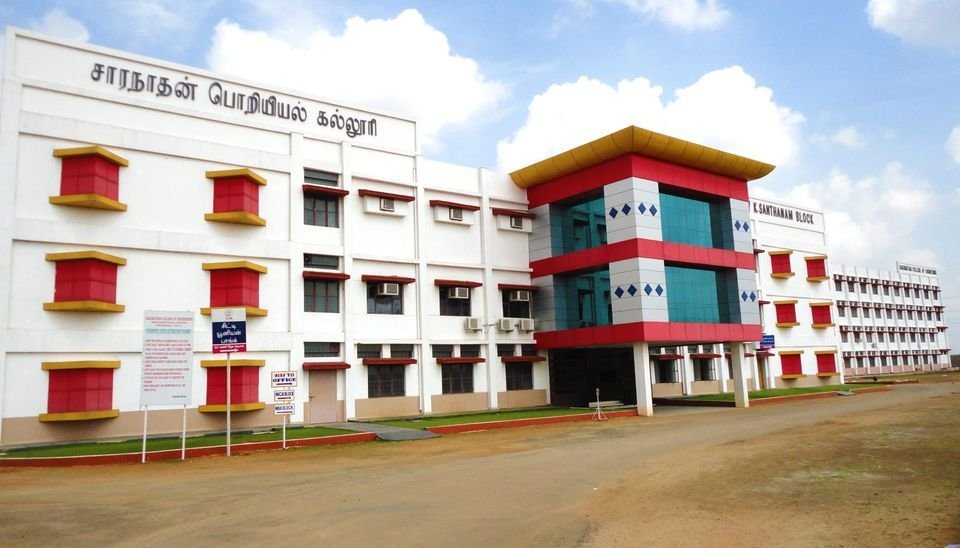
Saranathan College of Engineering is the brain-child of the great philanthropist Vidhya Seva Ratnam Sri. K. Santhanam, a charted accountant by profession. He named the college after his illustrious teacher (Guru) Prof. V. Saranathan, former Principal of National College, Trichy and an educationist par excellence of yester-years. The sprawling campus of the college is located on the Trichy-Viralimalai-Madurai National Highway (NH 45B). It offers ten Bachelor of Engineering Programmes and five Master of Engineering Programmes. Seven of the ten Bachelor’s programmes are accredited by National Board of Accreditation (NBA), India. In 2021 the institution has been accredited by National Assessment and Accreditation Council (NAAC), New Delhi, India with A+ grade in the first cycle itself. All departments are affiliated to Anna University, Chennai and approved by All India Council for Technical Education (AICTE), New Delhi, India. The college has a galaxy of well qualified and dedicated teaching faculty, spacious classrooms, smart lecture halls, conference halls, well-stacked library with online journals and well-equipped laboratories with advanced equipment for research and academic activities. The college is about 4 km from the Railway Junction and 12 km from the Tiruchirappalli International Airport (TRZ).
About the department
The Department of Electronics and Communication Engineering (ECE) was established in the year 1998 with an intake of 40, which was then increased to 120 in the year of 2011. In 2004, the master’s programme in Communication Systems was started. The Department is accredited by the NBA. In 2013, the Department was recognized as a research Centre by Anna University. Eighteen research scholars were awarded Ph.D., and currently 20 research scholars are pursuing Ph.D., in the Department. The Department has received funds from AICTE RPS, ANRF, AICTE MODROBS, TNSCST-RFRS and TNSCST-SPS. The Department has received the title winner award of Smart India Hackathon for 2020, 2021, 2022 & 2024. The Department has organized CSIR, TNSCST, AICTE, DST funded national and international seminars and conferences. Also, the Department conducted AICTE funded ATAL FDP in Communication domain during 2021, VLSI domain in 2023 and Navigation Systems domain in 2025.
important Dates
Abstract Submission
20.01.2026
Abstract Acceptance
22.01.2026
Paper Submission
23.02.2026
Paper Acceptance
16.03.2026
Camera Ready Paper Submission
20.03.2026
Schedule of Session
22.03.2026
Conference Dates
25, 26 March 2026
Technical Tracks
Track 1: 5G Communication Technologies
📶 Advanced channel coding for 5G (LDPC, Polar codes, decoding algorithms, HARQ schemes, coded modulation & shaping)
📶 Joint source‐channel coding for 5G applications
📶 Massive MIMO
📶 Millimeter‑wave enhancements and mitigations
📶 Spectrum sharing and dynamic spectrum access
📶 Interference management and resource allocation in dense deployments
📶 5G physical‐layer security
📶 Channel coding beyond 5G: high throughput schemes, shaping, joint source-channel coding
📶 On chip Communication
📶 Waveform design for low-latency, high-frequency operation
📶 Signal processing innovations for fast adaptation to varying channels
📶 Receiver architectures, beamforming, and precoding strategies for mobility
Track 2: 6G and Beyond
💫 New Spectrum & Technologies
💫 AI‐native network design with embedded ML throughout the stack
💫 Integrated communications, sensing, localization, and computing
💫 Terahertz (THz) band communication and challenges (propagation, hardware, channel modelling)
💫 Ultra‑massive / holographic / reconfigurable antennas, meta surfaces, RIS
💫 Non-terrestrial networks (NTN): satellite, aerial, and space integration
💫 New multiple access schemes, new waveforms, precoding / receiver algorithms
💫 Network architectures (edge / fog / cloud coordination), over‐the‐air computing
💫 Green communications and sustainable AI (energy efficiency, low carbon footprint)
💫 Semantic & goal‐oriented communications
💫 Quantum technologies and quantum learning for communications

Track 3: 5G and 6G for Navigation
🛰️ Hybrid Positioning
🛰️ Enhanced Positioning
🛰️ V2X Communication
🛰️ Real-time Data
🛰️ Ultra-Low Latency & High Bandwidth
🛰️ Advanced Positioning Precision
🛰️ Environmental Perception
🛰️ Heterogeneous Networking
🛰️ Real-time digital twin
🛰️ Integrated Aerial-Terrestrial-Satellite Networks
🛰️ Complementary to GNSS
🛰️ Spoofing Detection
🛰️ Advanced Positioning Techniques
🛰️ Specialized Signals
🛰️ Ultra‑precise positioning using 5G/6G (sub‑meter, centimeter level)
🛰️ Integration of GNSS/INS with 5G/6G as aiding systems
🛰️ Mobility support for high‐speed trains, vehicular networks, UAVs
🛰️ Navigation in GNSS‐challenged environments (indoors, underground, urban canyon)
🛰️ Radio maps / Channel Knowledge Maps (CKMs): construction, measurement, applications
🛰️ Multimodal sensing (vision, radar) fused with radio for localization and awareness
🛰️ Integration of communications & sensing (ISAC) in hardware and algorithms
🛰️ Navigation accuracy in complex environments (indoor, urban canyons)
🛰️ Environment‐aware optimization using radio maps (beamforming, resource allocation)

Track 4: AI in Wireless Communication
💻 AI based Transceivers for Wireless Systems
💻 On-device AI in Mobile Phones
💻 On-device AI and its Applications
💻 AI Computation on Radio Access Network
💻 AI at the Beyond 5G Edge
💻 Intelligent Edge Computing for 5G/6G Networks
💻 AI in the Wireless 5G/6G
💻 AI as a Service for Service Providers
💻 Digital Twins for Beyond 5G
💻 Distributed intelligence
Registration Fees
For Academicians
Rs. 1500
For Industralists
Rs. 2500
For Students
Rs. 800
Foreign Authors
$40
Publication Partners
Papers accepted after peer review will be published in the ASTI Springer (Scopus-Indexed) Book Proceedings / Google Scholar-Indexed Journal based on the author’s choice and payment of publication fees.
